Pages

Showing posts with label Favorite Kid. Show all posts

Thursday, 31 July 2014

Chinchillas

Little kiddo, let's talk about Chinchillas as Aunty here is thinking of keeping one but not now as my current situation doesn't allow me to. Maybe in the future. Just maybe...

Don't know what they look like?


Can't figure out still? Carry on reading then...

Chinchillas are rodents that are native to the Andes Mountains of northern Chile. Often kept as pets, chinchillas are also prized for their luxuriously soft fur and were nearly driven to extinction because of the demand.


Chinchillas are related to guinea pigs and porcupines. With short forelimbs and long, muscular hind legs, chinchillas resemble rabbits, but their ears are much shorter and rounder. They have large, black eyes and bushy tails. They have four toes on each foot, and the thin claws on each toe are surrounded by stiff bristles.
Chinchillas are typically 9 to 15 inches (23 to 38 centimeters) long, but the tail can add another 3 to 6 inches (8 to 15 cm) to their length. They generally weigh 1.1 to 1.8 lbs. (0.5 to 0.8 kilograms).


They are very social and live in colonies that consist of hundreds of chinchillas. Females tend to be aggressive toward other females. When females are ready to mate, they can also be aggressive toward males, and are the dominant of the two genders. Females are mostly monogamous; they have only one mate throughout their lives. Males, on the other hand, can have many female mates. This is especially true of domesticated males. Often, one male is bred with many females to create many offspring to sell.

Once a female chinchilla becomes pregnant, she will carry her young for about 111 days before giving birth. Females have babies twice a year. Each time they give birth, they will have one to six babies. These groups of babies are called litters. Individual babies are called kits.
Newborn kits are born with hair and with their eyes open. They weigh only 1.2 ounces (35 grams). The babies nurse for six to eight weeks, and when they're about 8 months old, the babies are ready to have offspring of their own. Generally, chinchillas live eight to 10 years, though some have lived as long as 20 years.


To stay clean, these rodents give themselves dust baths. It is recommended that domestic chinchillas take dust baths once or twice per week in fine volcanic ash that can be purchased at pet shops.

Don't ask me how this fella gets out... Ha ha...

They cannot live in hot countries unless if you switch the air-con on 24/7. The max. temperature is 25 - 27 deg C. Higher than that, they will most probably suffer heat strokes and will most likely die. They are nocturnal creatures and lots of time has to be spent playing with them.

They also don't trust easily. It takes lots of time is all I can say and they definitely don't do well with young kids since they get terrified easily. Remember they are a prey in the wild. They are also known to be very intelligent. If you manage them really well, you can even hug them!


Having said so much, let Aunty show you which colour I like. ^^

This one cost SGD3K in Singapore!

Let me leave you with a funny looking photo...


Still can't figure them out? Ask Mommy to bring you to Pet Lovers Centre near Esplanade station. ^^

Have a great day ahead little kiddo!

Dreamy C

Thursday, 5 June 2014

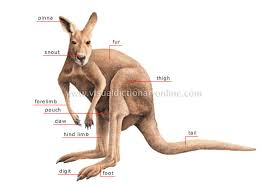
Kangaroos

My favorite kid is no longer a little one... =) We will talk about Kangaroos today!


Kangaroos are the largest living marsupials from the family Macropodidae. There are four species commonly referred to as the kangaroo: the red kangaroo, the eastern grey kangaroo, the western grey kangaroo, and the antilopine kangaroo.

Kangaroos are grazing herbivores, which means their diet consists mainly of grasses. They can survive long periods without water.


The Kangaroo is the national symbol of Australia.

Kangaroos are found in Australia and Tasmania, as well as on surrounding islands. Kangaroos live in varied habitats, from forests and woodland areas to grassy plains and savannas.


Kangaroos live and travel in organized groups or "mobs," dominated by the largest male. Male kangaroos are called boomers, bucks or jacks; females are does, flyers, or jills, and the young ones are joeys. The collective noun for kangaroos is a mob, troop or court.

Because of its long feet, a kangaroo cannot walk normally and they cannot walk backwards.
The red kangaroo is the largest marsupial in the world.
Kangaroos usually live to around six years old in the wild.

To move at slow speeds, a kangaroo will use its tail to form a tripod with its two forelimbs. It then raises its hind feet forward, in a form of locomotion called "crawl-walking."


Usually, female kangaroos give birth to one joey at a time. Newborns weigh as little as 0.03 ounces at birth - as small as a lima bean! After birth, the joey crawls into its mother's pouch, where it will nurse and continue to grow and develop. Red kangaroo joeys do not leave the pouch for good until they are more than eight months old. Gray kangaroo joeys wait until they are almost a year old.

So there you go! Enjoy...

Dreamy C

Friday, 13 September 2013

Beluga Whale

Little one, it's been a while. Aunty will share some information on Beluga Whale with you. Beluga Whale? What's that?

The beluga or white whale, Delphinapterus leucas, is an Arctic and sub-Arctic cetacean. It is one of two members of the family Monodontidae, along with the narwhal, and the only member of the genus Delphinapterus. This marine mammal is commonly referred to simply as the melonhead, beluga or sea canary due to its high-pitched twitter.

A lot to handle? A picture says a thousand words...


Preliminary investigations suggested a beluga’s life expectancy was rarely more than 30 years.

The adult beluga is rarely mistaken for any other species, because it is completely white or whitish-grey in colour. Calves, however, are usually born grey and by the time they are a month old, they have turned dark grey or blue grey. They then start to progressively lose their pigmentation until they attain their distinctive white coloration, at the age of seven years in females and 9 in males. The white coloration of the skin is an adaptation to life in the Arctic that allows belugas to camouflage themselves in the polar ice caps as protection against their main predators, polar bears and killer whales. Unlike the other cetaceans, the belugas seasonally shed their skin. During the winter, the epidermis thickens and the skin can become yellowish, mainly on the back and fins. When they migrate to the estuaries during the summer, they rub themselves on the gravel of the riverbeds to remove the cutaneous covering.

These cetaceans are highly sociable and they regularly form small groups, or pods, that may contain between two and 25 individuals, with an average of 10 members. Pods tend to be unstable, meaning individuals tend to move from pod to pod. Radio tracking has even shown belugas can start out in one pod and within a few days be hundreds of miles away from that pod. These pods contain animals of both sexes, and are led by a dominant male. Many hundreds and even thousands of individuals can be present when the pods join together in river estuaries during the summer. This can represent a significant proportion of the total population and when they are most vulnerable to being hunted.

They are cooperative animals and frequently hunt in coordinated groups. The animals in a pod are very sociable and they often chase each other as if they are playing or fighting, and they often rub up against each other.

In captivity, they can be seen to be constantly playing, vocalizing and swimming around each other. They show a great deal of curiosity towards humans and frequently approach the windows in the tanks to observe them. Belugas may also playfully spit at humans or other whales. It is not unusual for an aquarium handler to be drenched by one of his charges. Some researchers believe spitting originated with blowing sand away from crustaceans at the sea bottom.


Belugas also show a great degree of curiosity towards humans in the wild, and they frequently swim alongside boats. They also play with objects they find in the water; in the wild they do this with wood, plants, dead fish and with bubbles they have created. During the breeding season, adults have been observed carrying objects such as plants, nets and even the skeleton of a dead reindeer on their heads and backs. Captive females have also been observed displaying this behaviour, carrying items such as floats and buoys, after they have lost a calf; experts consider this interaction with the objects could be acting as a substitute behaviour.


Natural predators of Beluga Whales? Polar Bears and Killer Whales. During the winter, belugas commonly become trapped in the ice without being able to escape to open water, which may be several kilometres away. Polar bears take particular advantage of these situations and are able to locate the belugas using their sense of smell. The bears swipe at the belugas and drag them onto the ice to eat them. They are able to capture large individuals in this way; in one documented incident a bear weighing between 150 and 180 kg was able to capture an animal that weighed 935 kg.

Killer whales are able to capture both young and adult belugas. They live in all the seas of the world and share the same habitat as belugas in the sub-Arctic region. Attacks on belugas by killer whales have been reported in the waters of Greenland, Russia, Canada and Alaska.


Now let me show you a diagram of the Beluga Whale.


I hope you enjoy today's blog entry little one... 

Have a great Friday! It's the weekend soon!

Dreamy C

Monday, 8 April 2013

The Emperor Penguin

Little one, today we're going to talk about the Emperor Penguin. Let's begin...

  1. Emperor penguins are the largest penguins, standing about 4 feet (1.2 meters) tall.
  2. These flightless animals live on the Antarctic ice and in the frigid surrounding waters.
  3. Penguins employ physiological adaptations and cooperative behaviors in order to deal with an incredibly harsh environment, where wind chills can reach -76°F (-60°C).
  4. They huddle together to escape wind and conserve warmth.Individuals take turns moving to the group's protected and relatively toasty interior.Once a penguin has warmed a bit it will move to the perimeter of the group so that others can enjoy protection from the icy elements. 
  5. Emperor penguins spend the long winter on the open ice—and even breed during this harsh season.They have small bills and flippers, which helps to conserve heat, and special nasal chambers that minimize the heat normally emitted through exhalation.
    Because their arteries and veins are situated close together, emperor penguins have the ability to recycle their own body heat.
    With this system, blood is cooled down on the way to the penguins’ extremities and warmed up on the way back to the heart.
  6. Females lay a single egg and then promptly leave it behind.They undertake an extended hunting trip that lasts some two months!Depending on the extent of the ice pack, females may need to travel some 50 miles (80 kilometers) just to reach the open ocean, where they will feed on fish, squid, and krill. What's a krill?


  1. At sea, emperor penguins can dive to 1,850 feet (565 meters)—deeper than any other bird—and stay under for more than 20 minutes.
  2. Male emperors keep the newly laid eggs warm, but they do not sit on them, as many other birds do.Males stand and protect their eggs from the elements by balancing them on their feet and covering them with feathered skin known as a brood pouch.During this two-month bout of babysitting the males eat nothing and are at the mercy of the Antarctic elements.
  3. When female penguins return to the breeding site, they bring a belly full of food that they regurgitate for the newly hatched chicks.Meanwhile, their duty done, male emperors take to the sea in search of food for themselves.
  4. Mothers care for their young chicks and protect them with the warmth of their own brood pouches.
  5. Outside of this warm cocoon, a chick could die in just a few minutes.
  6. In December, Antarctic summer, the pack ice begins to break up and open water appears near the breeding site, just as young emperor penguins are ready to swim and fish on their own.
  7. Emperor penguins are also specially adapted to traveling in this extreme habitat.
    On the ice masses, they use strong claws on their feet to help grip the surface as they shuffle along. They also slide on their sleek bellies while pushing with their feet.

    Life Cycle of the Emperor Penguin


    Every winter (which begins in March in Antarctica), emperor penguins traverse up 80 km (50 mi.) across the ice to reach stable breeding grounds.
    Males arrive shortly before females, ready to attract a mate with displays and courtship calls.
    Emperor penguins are monogamous during each breeding season, choosing only one mate.
    Most will find a new mate the next year, but some pairs choose to reform a bond again.
    Once the egg is hatched, in May or June, the female will pass the egg to the male to incubate.
    She will make the long voyage back to the sea to feed on krill, squid, and fish.

    As there are no nesting supplies available on the ice mass, emperor penguins must create a safe, warm environment for the eggs using their own bodies.
    Careful to keep the egg sheltered, the male will balance the egg on his feet and cover it with a warm layer of feathered skin called a brood pouch.

    In the next couple months, the male emperor penguins must cope with the worst weather conditions on earth, all the while eating nothing.
    To withstand the harsh winds and blizzards, the penguins huddle together in groups. They take turns moving towards the inside of the pack, where it is warmer, thereby sustaining the entire group.

    Once the females arrive back at the colony, they regurgitate food for the hatchings to eat.
    At this time, the males can finally return to sea to fish, and the females will continue care for the chicks. After a few months, the juveniles leave the shelter of their mothers’ brood pouches and stay in chick groups called crèches.
    This allows the females to go fish.

    In December, the weather warms in Antarctica, breaking up the outer ice and bringing the sea closer to the nesting sites.
    When the young penguins reach the water, they are nearly done with their moult, and they’re ready to swim and fish on their own.
    Adult penguins begin their yearly moult once separated from their offspring.
    They store up body fat beforehand because it takes a lot of energy to replace all their feathers, and they are unable to fish because they lack waterproof protection.
    By January, the new plumage has grown in, and the hungry penguins take to the waters in groups to forage for the summer.

    Although emperor penguins are effective hunters, they are also prey to a few Antarctic animals as well. Only a third of the juvenile penguins will make it to their first birthday, falling prey to seabirds like giant petrels or skuas. In the water, both juveniles and adults are eaten by leopard seals and killer whales.

    Emperor penguins never developed a fear of humans due to Antarctic isolation.


    What You Can Do to Help 
    If you would like to help emperor penguins, you can reduce carbon emissions which lead to global warming. Some measures include walking, biking or taking public transportation instead of driving, using energy saver appliances and light bulbs, buying locally grown produce, reducing your consumption of manufactured goods and packaging, recycling, and more. 

    Click on this link. It's interesting. Towards the end, it shows how penguins leap out of sea to the edge of the ice. http://www.bbc.co.uk/nature/life/Emperor_Penguin#p00dhllc

    A Chick

    Chick with Mother


    I hope you've enjoyed this read on the Emperor Penguin little one. Let Aunty C take a rest now. Till next time...

    Dreamy C

Budgerigar for my Favorite Kid's Mom!!!

Ha ha... Title change a bit. We're going to talk about Budgerigar today little one. I assume that's your Mom's favorite. I believe your Mom's love for birds is equivalent to my love for animals. Let's begin...

What's a Budgerigar? What does it look like? Let Aunty C show you some photos. A picture speaks a thousand words.


There you go! This little birdie here is called the Budgerigar, pronounced [buhj-uh-ree-gahr]. I kid you not little one. As Aunty C type all these down, I can hear birds chirping nearby. 

  1. Wild budgerigars are originally from Australia
  2. They are nomadic birds, moving from place to place in search of water and food. 
  3. They are able to fly hundreds of miles if necessary in search of water. 
  4. These hardy birds endure a climate that can be very hot and dry and also cold as well as rainy depending on the season and the weather trends. 
  5. Budgies live in flocks and when conditions are favorable, they sometimes group together to form a huge flock containing thousands of budgies. Now, how does that look like? Let me show you, yet another photo.


  1. Wild budgerigars feed primarily on grass seeds, eucalyptus leaves and various other seeds and greens.
  2. Breeding usually occurs during rainy seasons when water is plentiful. 
  3. Like other parrots, budgies build their nests in holes found in trees. 
  4. They will chew at the tree cavity until they have the shape and size that they need. 
  5. The female budgie will lay an egg every 2 days until she has 4 to 8 eggs. 
  6. While the mother budgie is busy keeping the eggs warm, it is the father's job to feed the mother and protect the nest. 
  7. Incubation lasts about 18-21 days before the eggs will hatch. 
  8. Baby budgerigars usually fledge or leave the nest on the fourth or fifth week after they hatch. 
  9. Both the mother and father take turns feeding the babies. This reminds me of penguins. Let's talk about those next time.
  10. Their nicknames are Budgie, Parakeet, Grass Parakeet, Shell Parakeet.
  11. Wild budgies are primarily green with black stripes and yellow heads.
  12. Domestic budgies can be green, blue, yellow (lutino), white (albino), gray, violet and many varieties of these colors and patterns. 
  13. Their average size is 18 cm (7 in) long.
  14. They weigh around 26-40 grams.
  15. Their common enemies are predatory birds, snakes and environmental issues.
  16. Budgies, like all parrots, have 2 toes that face forward and 2 that face back unlike other birds who have 3 toes facing forward and 1 facing back. 
  17. Studies have shown that the yellow feathers of budgerigars have fluorescent pigment. Since budgies are able to see a broader spectrum of colors including some ultra-violet, these fluorescent feathers are thought to play a role in attracting a mate.
  18. Budgie eggs are white.
  19. Budgies can turn their heads around 180 degrees.
  20. If an adult budgie's cere (the flesh above the beak where the nostrils are located) is blue it is a male, if it is brown or tan it is a female.
  21. The average life span of a domestic budgie is 5-8 years however some have been known to live 15 years or more. 
  22. They can mimic human speech. With proper training, budgerigars can learn to talk about 100 words. Do you know that the budgie named "Puck" is listed in the Guinness World Records as the most talking bird? 
  23. Their name comes from aboriginal Australian, who knew budgie for over 40,000 years before Europeans arrived on their continent.
  24. Bones found in Australia reveal that wild budgies have been on Earth far longer than human beings have existed!
  25. Budgies can register 150 images per second. To compare, humans can only register 16 images per second.
  26. They can hear a range of sounds from 400 to 20,000 Hz.
  27. Budgies normal body temperature is over 102 degrees Fahrenheit and his heart beats more than 200 times a minute.
Ok!!! Regarding the color of the cere to decide gender of the bird, I found this:

A mature male's cere is usually light to dark blue, but can be purplish to pink in some particular colour mutations, such as Dark-eyed Clears, Danish Pieds (Recessive Pieds) and Inos, which usually display much rounder heads. Males are typically cheerful, extroverted, highly flirtatious, peacefully social, and very vocal.

Females' ceres are pinkish as immatures and switch from being beigish or whitish outside breeding condition into brown (often with a 'crusty' texture) in breeding condition and usually display flattened backs of heads (right above the nape region). Females are typically highly dominant and more socially intolerant.

When females get older, their ceres tend to be brown usually, females are often more bossy and rude with their own gender, but with males they get along better; usually when budgies of different gender are put together, they tend to be more kind to each other, some will not even fight or peck at each other for their life time.

Male Budgerigar

Female Budgerigar

Head Detail of a Male Budgerigar

English budgie (left), as compared to wild type budgerigars

Adult females (top) display beige to brown ceres, while adult males (bottom) typically have blue ceres or purplish-pink in albinistic and recessive pied varieties.

I wonder now why there's a wing named b@#~!$% there. 

A 'kinder' diagram for the little one. Previous diagram is meant for adults.

I hope you've learnt a few more things about your Mommy's favorite today little one! Till next time, Penguins we go... I wish you a brilliant day ahead kiddo! See ya around mate...^^

Dreamy C

Saturday, 6 April 2013

Great White Shark for my Favorite Kid

The last time I did a post like this was 11th January 2013. My favorite kid, sorry ah... Aunty C a bit busy so lapse by 3 months plus. I promise to buck up and introduce you to most if not, ALL of the living things in the Land & Sea Kingdom.

Today my little one, I'm going to introduce you to the Great White Shark. I promise to do a more gentle animal the next time round but for now, let me introduce you to the BIG creatures! Ha!

The Great White Shark

Don't be afraid little one. This fella here only eat human when they 'think' you are food. Human usually survive after being bitten by this big fella as they usually let you go when they know that you are NOT food. What is one of their food?

Fat Seals

Little one, bear this in mind. EVERY living thing can be dangerous no matter how 'gentle' they look. Let Aunty C give you more facts about what we are talking about today.


  1. They are the largest predatory fish in the sea.
  2. They are not recommended for human consumption as it has very high mercury levels.
  3. Though they look ferocious, believe it or not, they avoid fighting for food. When there is only enough food for one, they have a tail-slapping contest. What is that? They swim past each other, each slapping the surface of the water with their tails and often directing the spray toward the other shark. Who's the winner? The one who delivers the most tail slaps of course! This make me think who's in charge of counting then? Do they also encounter miscalculation? That, I leave to your imagination and desire to find out more as there's only so much Aunty C can do. *winks*
  4. They have an enormous liver that can weigh up to 24% of its entire weight. How heavy are you now little one? ^^
  5. They may use and lose more than 1,000 teeth in its life time. As teeth fall out, they are rapidly replaced by those in the row behind them. Talking about teeth, let me show you a photo of their teeth.


  1. Sorry had to continue as point 1 again due to insert of photo. Let's continue. They are not all white. Their back may be dark blue, gray, brown or black.
  2. They live for about 25 years.
  3. They are capable of eating sea lions WHOLE.
  4. They often have scratches and scars on their snouts which resulted from their prey fighting back.
  5. Scientists estimate that after a big meal, a Great White Shark can last up to 3 months before needing another one.
  6. They can roll its eyeballs back, which protects the vital front part of the eye from being scratched.
  7. Young Great White Sharks eat Leopard Sharks.
  8. A Great White Shark was once kept in an aquarium for a few days but it became disoriented, continually hitting its nose against the glass, so it had to be released into the sea. They usually die when being confined. One of them died within 10 days!
  9. Some scientists believe there are less than 10,000 Great White Sharks in the entire world. Take the advice of Aunty C little one and say NO to sharks fin.
  10. They breed late in life. They do not start breeding until they're at least 20 years old.
  11. They are no match for Orcas in a fight. Orcas/Killer Whales, sometimes hunt in packs plus they are too fast and strong for even the biggest Great Whites. Orcas have been known to kill and eat them as well.
  12. Male Great Whites reach maturity between 9 - 10 years of age. Females between 14 - 16 years of age. 
  13. They can have a life span of over 30 years.
  14. They are one of only a few sharks known to regularly lift its head above the sea surface to gaze at other objects such as prey. This is known as spy-hopping.
  15. They are ambush hunters, taking prey by surprise from below.
  16. Shark attacks most often occur in the morning, within 2 hours after sunrise, when visibility is poor. Their success rate is 55% in the first 2 hours, falling to 40% in the late morning after which hunting stops.
  17. The shark pup's powerful jaws begin to develop in the 1st month. 
  18. The unborn sharks participate in intrauterine cannibalism; stronger pups consume their weaker womb-mates. 
  19. The mother gives birth to a litter of 2 - 10 pups, each of which average 1.5m in length.
  20. Delivery is in spring and summer.
  21. They have the ability to smell a single drop of blood in 100L of water. 
  22. They can sense blood in the water up to 5km away.
  23. They can also sense animal generated electromagnetic fields. Ok I leave your Mommy to explain that to you.
I think that's enough information for now. Learn more when you grow up. I leave you with a few more photos. Ta Ta~~~


See how they are able to flip themselves out of the water!

Close-Up


Dreamy C